
Engaging Consumers in Sustainable Textile Practices




The way Europeans buy, use, repair, and dispose of clothing is becoming a critical lever in the transition to a circular textile economy. While innovation in materials and recycling technologies is essential, real change cannot happen without consumers. This is what CISUTAC emphasises: by placing citizens at the centre of the system and investigating how everyday decisions can either reinforce wasteful patterns or support circular ones.
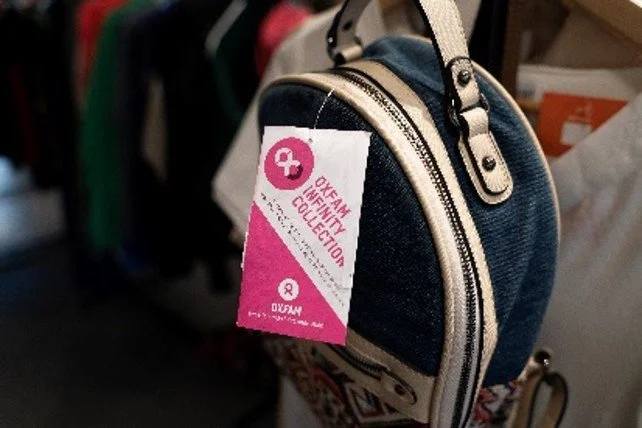
Clothing label promoting the Infinity Collection in Oxfam Belgium shops
CISUTAC partners Wageningen University & Research, Kringwinkel Antwerp, Oxfam Belgium and Ireland, and Decathlon Italy, recently produced two reports focusing specifically on consumer behaviour and awareness-raising (Deliverable 3.1: Consumer circular behaviour understanding and guidelines to support behavioural change via interventions and Deliverable 5.3: Consumer awareness campaign). Together, these deliverables bring behavioural science, real-world experiementation, and large-scale communication campaigns to life across several European countries. Circular fashion thrives not only on better products, but on better habits, and those habits grow when people have the right tools, messages, and opportunities to support them
Understanding the consumer’s role in the textile system
Consumers occupy several roles within the textile value chain: buyers, users, repairers, donors, and disposers. CISUTAC’s research acknowledges this complexity and moves beyond the idea of a “typical” consumer. Instead, it explores motivations, barriers, and decision-making processes at each stage of a garment’s life.
Using a four-step behavioural change model (from Steg & Vlek, 2009), the project combined qualitative and quantitative methods. Focus group discussions in Kringwinkel Antwerp stores offered insights into how consumers feel about second-hand clothing, repair, and disposal. These insights were complemented by surveys with over 1000 Flemish adults and customers of another Belgian retailer, as well as innovative experiments using AI to assess consumer's wardrobe.
The findings reveal a familiar tension: consumers often voice strong environmental values and a genuine desire to “do the right thing”, yet their behaviour and day-to-day choices are shaped as much by practical factors such as price, convenience, time, and emotional attachment to their clothes.
What drives circular behaviour?
Across the studies conducted, consumers motivations and barriers differed by activity:
Second-hand acquisition is driven by value for money, uniqueness, and environmental concern. However, poor store presentation and hygiene perceptions still deter many potential consumers.
Textile repair is motivated by emotional attachment and waste reduction, but constrained by lack of skills, time, confidence, and affordable, available services.
Disposal and donation are often motivated by a desire to reduce waste or “do good,” yet emotional attachment and lack of knowledge about disposal channels create friction for consumers.
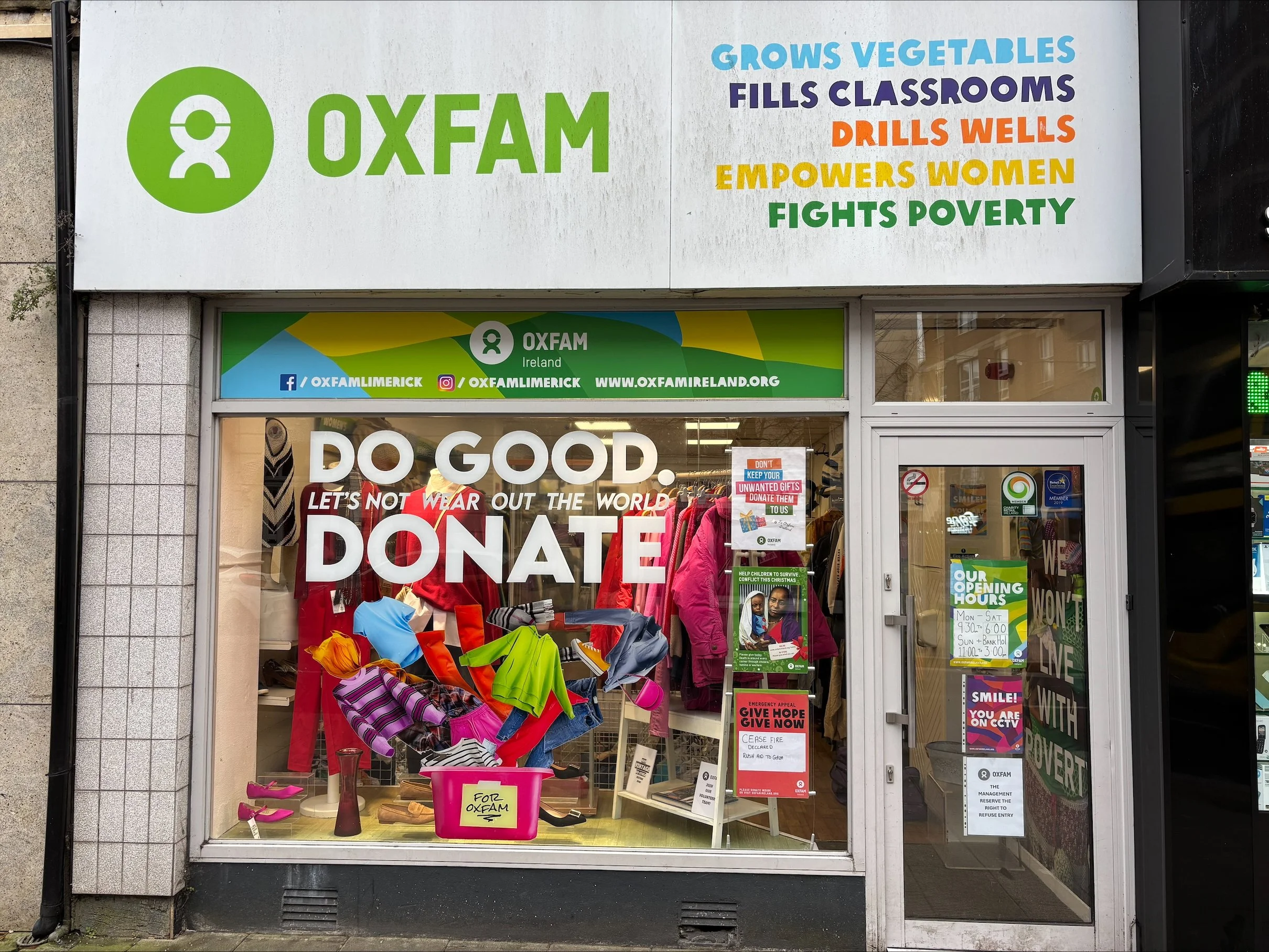
In-store intervention by Oxfam Ireland
A particularly important insight is the intention–behaviour gap. Many consumers intend to buy second-hand or repair clothing but fail to act. Behavioural analysis showed that motivation is the strongest predictor of both intention and action, while opportunity (access to services) and capability (skills and knowledge) also matter.
Interestingly, donating and repairing appear to be complementary rather than competing behaviours. Consumers who donate clothes are often more interested in repair services, especially for garments with high emotional or functional value.
Testing Real-World Interventions
Moving beyond observation research, CISUTAC partners tested practical interventions:
At Kringwinkel Antwerp, a repair pilot in four retail locations allowed customers to bring garments in for repair. The results were encouraging: 46 customers repaired 71 different garments, with high satisfaction and a strong willingness to use such service again. The average willingness to pay (€6.07) suggests a market for accessible repair. Customers cited environmental concern, emotional attachment, and garment functionality as key motivations to repair their clothes.
By contrast, a donation-focused campaign in Irish stores showed no statistically significant increase in donations during the short test period. However, visual trends hinted at delayed effects, and strong differences between stores highlighted the importance of tailoring strategies to the local context. This underlines an important lesson: not all circular behaviours respond equally well to short-term nudges, especially when they rely on deeper emotional or logistical commitments.
Another experimental activity explored assessing wardrobes. An AI-based estimation tool was tested alongside self-reported data on items that consumers owned and kept in their wardrobes. The discrepancy was striking: AI estimated around 50 items per wardrobe, while consumers reported an average of 222 items. While promising, this approach still requires significant refinement before it can reliably support research or policy.
For more detailed insights into the research methods and findings, consult CISUTAC’s Deliverable 3.1: Consumer circular behaviour understanding and guidelines to support behavioural change via interventions.
Local awareness campaigns: why segmentation and emotion matters
Alongside behavioural experiments and research, CISUTAC also invested heavily in public awareness. One of CISUTAC tasks focused on large-scale dissemination actions to raise awareness of textile impacts and promote circular practices such as reuse, repair, donation, and second-hand purchasing. Three partners led this effort: Oxfam Ireland, Oxfam Belgium, and Decathlon Italy. Rather than using a single template, each partner developed a strategy tailored to its national context and audience.
Ireland: From donation drives to national media engagement

Oxfam Ireland's campaign ambassador Aisling Bea
In Ireland, awareness-raising activities were developed through a structured preparatory phase combining behavioural research with creative design. A visual intervention titled “Do Good, Donate” was implemented in selected shop windows between February and March 2025 and supported by coordinated social media content. A consistent visual identity was used across in-store and online channels, and its impact was assessed using a test-and-control methodology across comparable stores. While short-term effects on donation volumes were mixed, the campaign provided valuable insights into how design-led approaches can raise attention to textile disposal practices.
Building on this work, Oxfam Ireland expanded its actions through the national Second Hand September campaign in 2025. Weekly themes addressed donation, repair, reuse and environmental awareness through digital content, workshops, influencer collaborations and national media appearances. Initiatives such as the PostBack home collection service, repair roadshows and fashion-focused content helped integrate circular behaviours into everyday practices. Together with the Send Pre-Loved Christmas campaign, these actions created a continuous communication cycle linking donation, repair and reuse rather than treating them as isolated behaviours.
Belgium and the “Infinity Collection”
In Belgium, consumer awareness actions centred on the Infinity Collection campaign developed by Oxfam Belgium, aiming to extend clothing lifecycles by encouraging both donation and second-hand purchasing. Developed together with a creative agency, it was structured in two phases: a spring donation drive to build the collection, followed by a second phase during Second Hand September focusing on reuse and second-hand consumption as alternatives to fast fashion.
Italy: product longevity through emotional storytelling
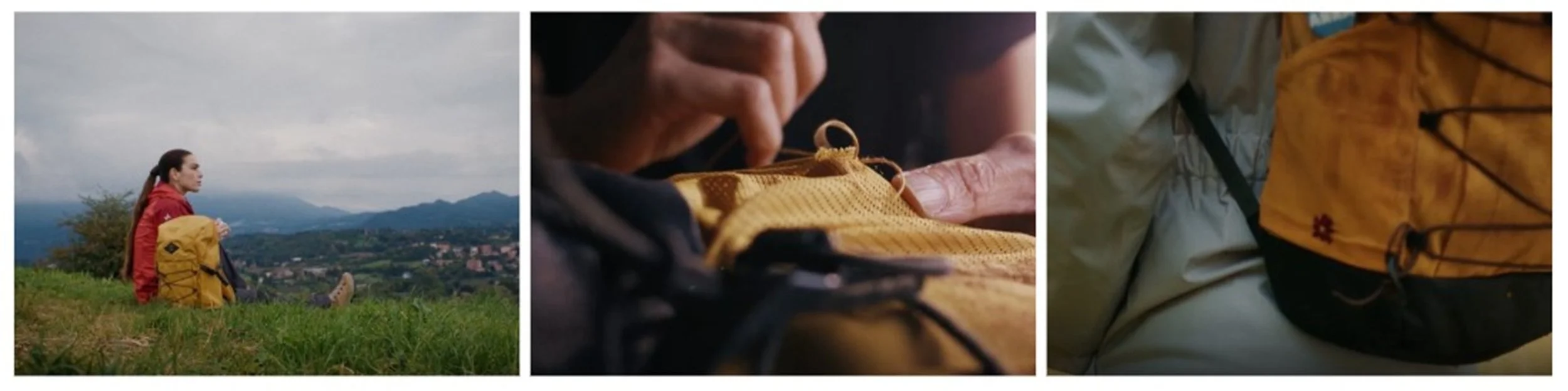
Frames from Decathlon Italy awareness campaign
In Italy, Decathlon Italy developed a two-year, video-based awareness strategy to promote repair and second-hand consumption through emotional storytelling rather than service promotion. The campaign sought to reshape how consumers relate to products by framing longevity as a cultural and relational value rather than simply a technical or economic one. The narrative followed a backpack through different life stages, portraying repair as an act of care and each mark or “scar” as part of the product’s story.
Together, these campaigns exceeded the project’s visibility targets, reaching over two million impressions across digital, broadcast, and in-person channels. While behavioural change could not be measured directly in the short term, engagement levels show that evidence-based messaging and clear calls to action resonate with the public.
A central conclusion from both deliverables is that one-size-fits-all strategies do not work. Consumers differ by age, values, stage of change, and access to services. Segmentation is therefore essential to maximise impact. The research also highlights the power of emotional attachment. Garments are not just products; they are linked to memories, identity, and personal history. Campaigns that frame repair and reuse as acts of care or continuity may be more effective than purely environmental appeals.
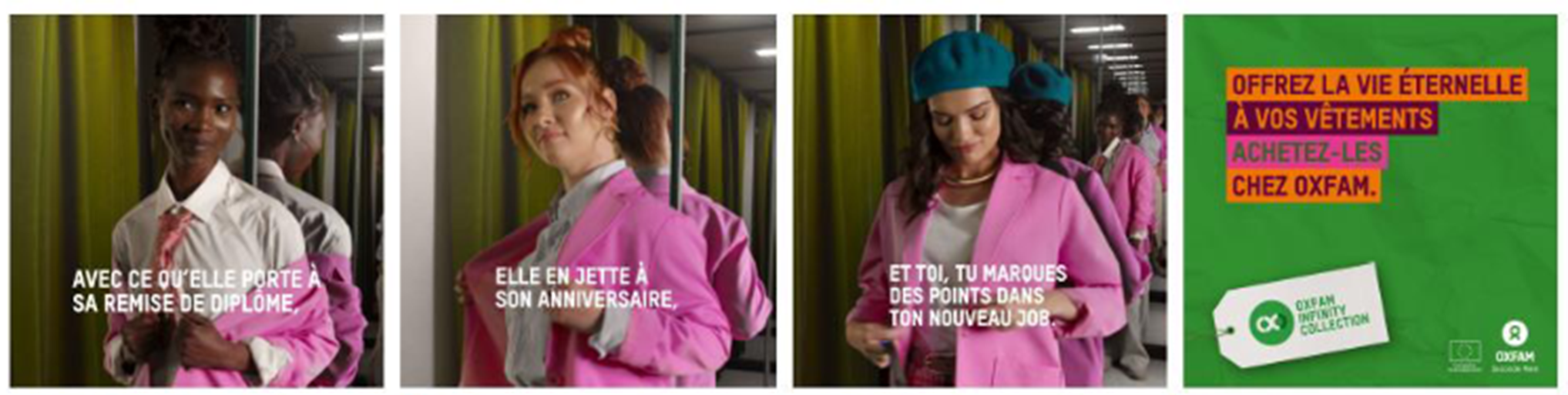
Online content used on the launch of the Infinity Collection campaign by Oxfam Belgium
Similarly, practical barriers must be reduced. Repair workshops, home collection services, and styling support all lower the threshold for action. When motivation is matched with opportunity and capability, circular behaviour becomes more likely, turning good intentions into everyday practice.
For more detailed insights into the campaigns and their results, consult CISUTAC’s Deliverable 5.3: Consumer awareness campaign.
The CISUTAC findings provide a strong foundation for future consumer-focused interventions in the textile sector. Key recommendations include further validation of new assessment tools, especially wardrobe assessment methods, as well as broader and longer testing of interventions to better capture lasting behavioural change. The scope of future work should also expand to additional clothing categories and circular practices such as swaps and sustainable purchasing, alongside cross-cultural validation to ensure the relevance of results across different European contexts. Ultimately, CISUTAC shows that transforming textile consumption is not just a technical challenge but a behavioural one. Circularity will not be achieved through infrastructure alone, it must be lived out in wardrobes, shops, and households across Europe.
